How to Convert Any Recipe to Nut-Free
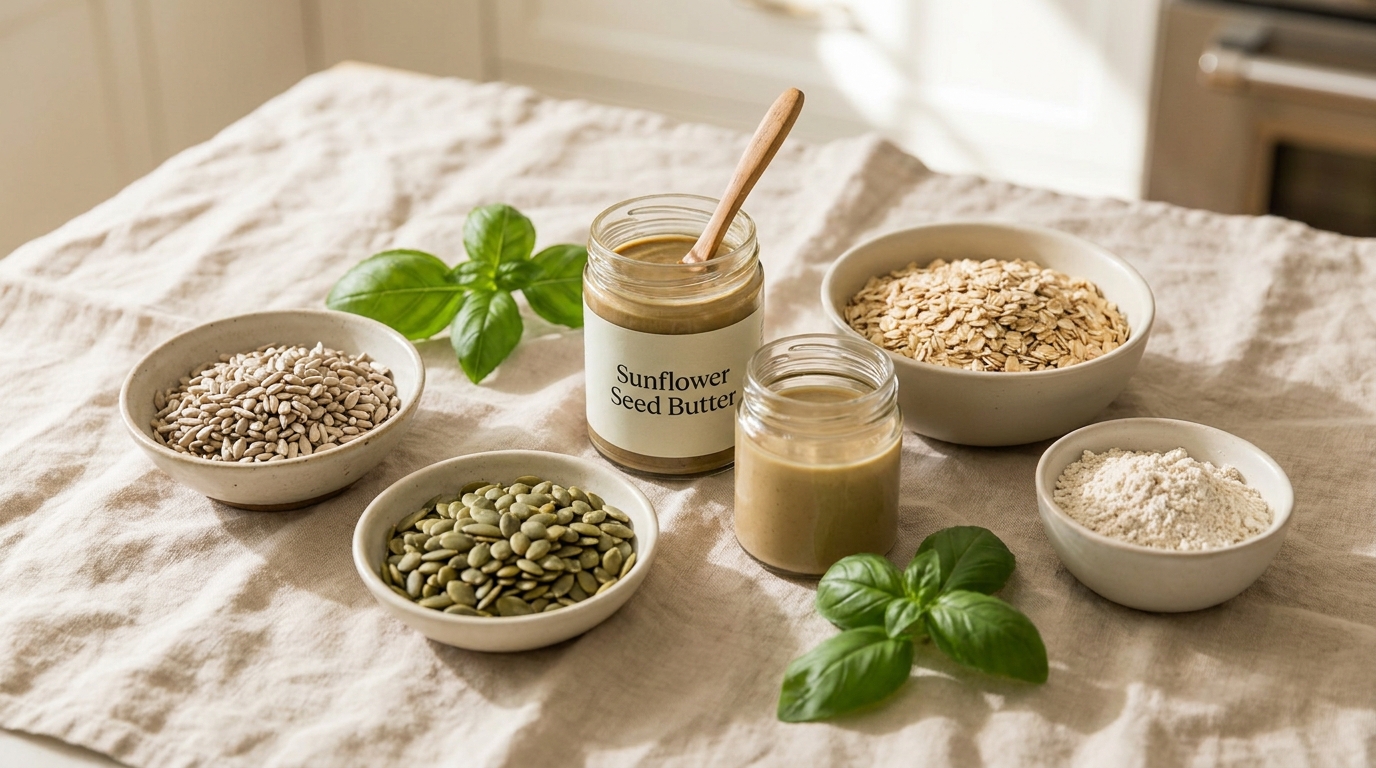
How to Convert Any Recipe to Nut-Free
You scroll through a recipe that looks perfect — until you hit the ingredient list. Almond flour crust. Cashew cream filling. A pesto garnish made with pine nuts. If your household is nut-free, that recipe just became off-limits, and the disappointment is doubled by the fact that so many “healthy” or “wholesome” modern recipes lean almost entirely on nuts for structure, fat, and flavor.
Going nut-free is rarely a preference. It is usually a necessity — a child with a peanut allergy, a school policy that bans tree nuts in lunchboxes, a family member managing anaphylaxis risk, or a workplace where someone reacts to airborne traces. Unlike many dietary swaps, the stakes here are high. A misread label or a sloppy substitution does not just compromise the dish — it can send someone to the hospital.
The good news is that almost any recipe can be made nut-free with the right substitutions. The better news is that with a bit of food science, those substitutions can produce results that are genuinely delicious — not just “good enough.” This guide will walk you through how to convert recipe to nut-free confidently, whether you are baking a birthday cake, packing a school lunch, or rebuilding a beloved family dish.
Let’s start with the fundamentals.
Tree Nuts vs. Peanuts vs. Coconut: Know What You Are Avoiding
Before you swap anything, you need to know exactly what you are avoiding. “Nut-free” can mean different things to different people, and getting this wrong is the single most common mistake.
- Tree nuts include almonds, cashews, walnuts, pecans, pistachios, brazil nuts, hazelnuts, macadamia nuts, and pine nuts. They grow on trees and share enough protein structure that someone allergic to one tree nut may react to others — though not always.
- Peanuts are legumes, not nuts. They grow underground and are botanically closer to lentils and beans. A peanut allergy is a separate diagnosis from a tree nut allergy, although roughly 30% of people with peanut allergies also react to one or more tree nuts.
- Coconut is botanically a drupe (a stone fruit seed), not a true nut. The FDA, however, classifies coconut as a tree nut for labeling purposes. Most people with tree nut allergies tolerate coconut without issue, but some do not. Always check with the allergic person’s allergist before assuming coconut is safe — and never assume on someone else’s behalf.
When you convert a recipe to nut-free, the first step is always to confirm exactly which ingredients are off-limits. A peanut-allergic child may be perfectly fine with almonds. A tree-nut-allergic adult may avoid coconut to be safe. There is no universal nut-free template — only the specific allergy profile of the person who will eat the food.
The Cross-Contamination Problem
Even ingredients that contain no nuts can cause reactions if they were processed on shared equipment. Look for two phrases on packaging:
- “Manufactured in a facility that processes [tree nuts/peanuts]” — shared facility, lower but real risk.
- “Manufactured on shared equipment with [tree nuts/peanuts]” — much higher risk; many allergic households avoid these entirely.
Brands like SunButter, Enjoy Life, MadeGood, and Don’t Go Nuts run dedicated nut-free facilities. For severe allergies, sourcing from these brands is non-negotiable.
What Nuts Actually Do in Recipes
The biggest mistake when you make a recipe nut-free is treating the substitution as cosmetic — pull the nuts out, sprinkle in something else, done. But nuts pull triple duty in most recipes. To swap them well, you have to know which job they are doing.
Nuts serve three main functional roles:
- Texture — toasted nuts add crunch, body, and contrast. A walnut on top of a brownie is not just decoration; it is a structural counterweight to the soft crumb beneath it.
- Flavor — nuts carry distinctive, fat-soluble flavor compounds. Almonds taste different from pecans, which taste different from cashews. They also contribute richness through their high fat content.
- Structure — almond flour acts as a gluten-free flour base. Cashew cream binds vegan cheesecakes. Peanut butter holds together no-bake cookies. In these cases, the nut is doing real load-bearing work.
When you choose a substitute, identify which role you are filling. A toasted seed will replicate texture. A flavored oil will fill the fat-and-flavor role. A seed flour with a binder will rebuild the structure. Mismatch these and the recipe falls apart — sometimes literally.
Nut Flour Replacements
Almond flour shows up everywhere in modern baking — gluten-free cookies, paleo crusts, keto loaves, macarons. Replacing it is doable, but each option has quirks worth knowing.
| Nut Flour | Best Nut-Free Replacement | Ratio | Notes |
|---|---|---|---|
| Almond flour | Sunflower seed flour | 1:1 | Closest texture match. Watch for green tint reaction (see below). |
| Almond flour | Pumpkin seed flour | 1:1 | Slightly grassier flavor; great in savory bakes and dark cakes. |
| Almond flour | Oat flour | 1:1 | More absorbent — add 1-2 tbsp extra liquid per cup. Mild flavor. |
| Almond flour | Tigernut flour | 1:1 | Technically a tuber, naturally sweet, AIP-friendly. |
| Hazelnut flour | Toasted sunflower seed flour | 1:1 | Toast the seeds first to mimic hazelnut depth. |
| Pecan flour | Toasted oat flour + cinnamon | 1:1 | Cinnamon helps replicate that warm pecan note. |
The Green Tint Problem
Here is a piece of food science that catches almost everyone off guard the first time. Sunflower seed flour and baking soda react to produce a green or blue-green color. The chlorogenic acid in sunflower seeds reacts with the alkaline baking soda, producing chlorogenic acid quinones — pigments that turn your muffins an alarming shade of green. The food is completely safe to eat, but it looks like science class went wrong.
You have two ways to fix it:
- Add an acid — a teaspoon of lemon juice or vinegar in the batter neutralizes the reaction and keeps the color normal.
- Switch leaveners — use only baking powder (which contains its own acid) instead of baking soda.
- Lean into it — for St. Patrick’s Day or Halloween, the green is free fun.
This reaction does not happen with pumpkin seed flour, oat flour, or tigernut flour, so those are safer choices when color matters and you cannot tinker with the leavening.
Nut Butter Replacements
Peanut butter, almond butter, and cashew butter are the workhorses of smoothies, cookies, sauces, and snacks. Replacing them is one of the more rewarding swaps because the seed-butter category has gotten genuinely excellent in the last decade.
| Nut Butter | Nut-Free Substitute | Ratio | Flavor Profile |
|---|---|---|---|
| Peanut butter | Sunflower seed butter (SunButter) | 1:1 | Sweetest seed butter. Closest crowd-pleaser swap. |
| Peanut butter | Soy nut butter | 1:1 | Roasted, peanut-like flavor (skip if soy is also restricted). |
| Almond butter | Sunflower seed butter | 1:1 | Mild, slightly sweet. Best general-purpose swap. |
| Almond butter | Tahini (sesame seed paste) | 1:1 | Bitter, savory — better in dressings and savory bakes. |
| Cashew butter | Sunflower seed butter | 1:1 | Lacks cashew’s natural sweetness; add a pinch of sugar. |
| Cashew butter | Pumpkin seed butter | 1:1 | Grassy, slightly herbal. Works well in green smoothies. |
| Hazelnut butter | Sunflower seed butter + cocoa | 1:1 | Add 1 tbsp cocoa per 1/2 cup for a Nutella-style swap. |
A few things worth knowing:
- Sunflower seed butter is sweeter than peanut butter. If you are using it in a dessert recipe, you can usually cut the sugar by 10-15%.
- Tahini is bitter. It is a wonderful substitute in savory contexts (dressings, hummus, savory cookies) but can throw off sweet recipes unless balanced with extra honey, maple syrup, or sugar.
- Pumpkin seed butter is grassy. It works beautifully with chocolate, dark caramel, and earthy spices. It can clash with vanilla-forward bakes.
- Watch the green tint reaction again. Sunflower seed butter in cookies leavened with baking soda may turn the cookie green inside. Add a teaspoon of lemon juice or use only baking powder to prevent it.
Cashew Cream Replacements
Cashew cream — soaked raw cashews blended with water until silky — is the default vegan substitute for heavy cream, cream cheese, and even ricotta in modern plant-based cooking. If you are making a recipe nut-free and vegan, you need a different playbook.
- Sunflower seed cream — soak 1 cup raw sunflower seeds in hot water for 1-2 hours, drain, and blend with 3/4 cup fresh water until smooth. Strain through a nut milk bag if you want it ultra-silky. Closest direct analog to cashew cream.
- Silken tofu — blend smooth for an instant, high-protein cream. Ideal for cheesecakes, custards, and creamy pasta sauces. Neutral flavor.
- White bean puree — cooked cannellini or great northern beans, blended with a little olive oil and lemon juice, make a remarkably creamy base for soups and dips. Mild, slightly starchy.
- Hemp seed cream — blend 1/2 cup hulled hemp seeds with 1 cup water. Naturally creamy without soaking. Slight grassy note; rich in omega-3s.
- Oat cream (commercial) — brands like Oatly Cream and Califia Farms sell oat-based heavy cream substitutes that pour and whip like dairy cream. The most convenient option.
- Coconut cream — if coconut is approved, full-fat coconut cream is the richest cream substitute available. Confirm with the allergist first.
For a cream sauce or alfredo, sunflower seed cream is the most direct cashew swap. For a cheesecake, silken tofu wins on texture. For a savory soup, white bean puree is a sleeper hit.
Pesto and Other Nut-Based Sauces
Pesto is a place where nut-free substitution shines. The pine nuts in classic pesto contribute richness and body, but seeds do this job beautifully — and many people prefer the result.
Quick Nut-Free Pesto Formula
- 2 cups fresh basil leaves (or basil + parsley + spinach)
- 1/3 cup raw or lightly toasted sunflower seeds, pumpkin seeds, or hemp seeds
- 2 cloves garlic
- 1/3 cup grated parmesan (or nutritional yeast for vegan)
- 1/2 cup good olive oil
- Juice of 1/2 lemon
- Salt to taste
Pulse everything in a food processor. Pumpkin seeds give the brightest green color. Sunflower seeds give the closest texture to pine nuts. Hemp seeds add a faint nutty-grassy depth that is gorgeous on pasta.
Other Nut-Heavy Sauces
| Sauce | Original Nut | Nut-Free Substitute |
|---|---|---|
| Pesto Genovese | Pine nuts | Sunflower seeds, pumpkin seeds, or hemp seeds |
| Romesco | Almonds | Sunflower seeds + extra roasted red pepper |
| Mole poblano | Almonds and/or peanuts | Pumpkin seeds (already a traditional ingredient — just increase) |
| Satay sauce | Peanut butter | Sunflower seed butter or tahini + soy sauce + lime |
| Pad thai sauce | Peanut butter + crushed peanuts | Sunflower seed butter + toasted sesame seed garnish |
| Baba ganoush | Sometimes contains walnuts | Skip nuts entirely; tahini already does the work |
Texture and Crunch Substitutes
When a recipe relies on chopped nuts for crunch — granola, salads, baked goods, ice cream toppings — the trick is to find another textured ingredient that survives the same conditions.
- Toasted sunflower seeds — the all-purpose nut-free crunch.
- Toasted pumpkin seeds (pepitas) — slightly larger, satisfying chew.
- Toasted sesame seeds — small but mighty; work especially well on Asian-inspired dishes and salads.
- Toasted hemp seeds — softer crunch, omega-3 boost.
- Toasted oats or rolled oats — an underrated stand-in for chopped nuts in granola and crumbles.
- Crispy chickpeas — roast at 400 F until shatteringly crisp; spice with cumin or smoked paprika.
- Crispy rice cereal — the secret weapon in nut-free chocolate bark and energy bars.
- Pretzel pieces — salty crunch that works in sweet bakes (think pretzel-topped brownies).
- Roasted chickpea flour clusters — savory granola for salads.
- Toasted coconut flakes — if coconut is approved, an excellent nut texture replacement.
A general rule: toast your seeds. Toasting unlocks the same Maillard browning and oil release that makes nuts taste rich, and the difference between raw and toasted is dramatic.
Asian Cuisines That Lean on Peanuts and Cashews
Some cuisines are particularly nut-heavy. Thai, Indonesian, Sichuan Chinese, and certain Indian dishes use peanuts or cashews as a core building block. These recipes need thoughtful conversion, not just substitution.
Pad Thai
Replace peanut butter in the sauce with sunflower seed butter (1:1). Garnish with toasted sesame seeds, crispy fried shallots, and crushed roasted soy nuts (if soy is allowed) instead of crushed peanuts.
Kung Pao Chicken
Swap roasted peanuts for toasted pumpkin seeds or sunflower seeds. Add them at the very end so they keep their crunch. The dish loses none of its character.
Satay Sauce
The classic peanut satay can be rebuilt with sunflower seed butter, coconut milk (if approved), soy sauce, lime juice, brown sugar, and a touch of red curry paste. Some cooks prefer tahini-based satay for its bitter complexity.
Indian Korma and Pasanda
Cashew paste is what makes these sauces velvety. Sub with sunflower seed cream or, for a more authentic mouthfeel, blended silken tofu plus a tablespoon of pumpkin seed butter.
Indonesian Gado-Gado
Same principle as satay — sunflower seed butter replaces peanut butter beautifully. Tamarind, palm sugar, and chiles do the rest.
Baking with Nut-Free Flours: The Binding Issue
When you replace almond flour with a seed flour, you are not making a simple swap — you are changing the protein profile of your batter. Almond flour contains specific proteins that help structure and hold a baked good together. Sunflower and pumpkin seed flours behave similarly, but oat flour and tigernut flour do not.
If you find your nut-free baked goods crumbling or feeling gritty, add a binder:
| Binder | Amount per cup of flour | Notes |
|---|---|---|
| Xanthan gum | 1/2 tsp | Gives stretch and structure; do not exceed or it gets gummy. |
| Psyllium husk powder | 1-2 tsp | Adds elasticity; common in gluten-free bread baking. |
| Ground flaxseed + water | 1 tbsp flax + 3 tbsp water | Doubles as an egg replacer. |
| Chia seed gel | 1 tbsp chia + 3 tbsp water | Slight crunch; works in muffins and quick breads. |
You may also need to increase eggs by one (if eggs are allowed) or add an extra tablespoon of fat per cup of flour to keep things tender. Nut-free baking is a slightly wetter, slightly more bound style of baking — adjust accordingly.
Hidden Nuts in Packaged Foods
This is where nut-free cooks get tripped up most often. Nuts hide in places you would not expect, and label-reading becomes a daily habit. When you make a recipe nut-free, scan every packaged ingredient for both obvious and obscure nut content.
Common hidden-nut foods:
- Mortadella and some Italian deli meats — often contain pistachios.
- Marzipan, frangipane, and almond paste — almond-based, found in many European pastries.
- Nougat — most varieties contain almonds, hazelnuts, or pistachios.
- Pesto — almost always contains pine nuts or other tree nuts; check every jar.
- Mole sauces — traditionally include almonds and/or peanuts.
- Some breads and bagels — particularly multigrain or “harvest” loaves can contain walnuts or pecans.
- Granola, granola bars, and energy bars — even “fruit” varieties often contain nut traces or processing risk.
- Cereal — Honey Bunches of Oats, muesli, and many brands have nut variants on shared lines.
- Ice cream — pistachio, butter pecan, and rocky road are obvious; the bigger risk is shared scoops and shared production lines.
- Vegan cheeses and creams — most are cashew-based. Read labels carefully.
- Asian sauces — many curry pastes, satay sauces, and stir-fry sauces contain peanuts or peanut oil.
- Baklava and most Middle Eastern pastries — heavily nut-based.
- Pralines, turtles, and many chocolate confections.
For severe allergies, also avoid:
- Bulk bins (cross-contact almost guaranteed)
- Shared deli slicers
- Bakery items without sealed packaging
- “Natural flavors” on imported products (occasionally derived from nut sources)
Always read the full ingredient list every time you buy a product — manufacturers reformulate without notice.
The Easy Way: Let AI Handle the Conversion
By now you have the working knowledge to make a recipe nut-free. You know how sunflower seed flour reacts with baking soda. You know that tahini is bitter and SunButter is sweet. You know to swap pine nuts for pumpkin seeds in pesto, and you know which packaged foods to check twice.
But applying this every time you find a recipe online is exhausting, especially when the stakes are this high. A missed ingredient, a forgotten label warning, a substitution that throws off the texture of a birthday cake your child has been waiting all week for — these are real costs. And for parents packing school lunches every day, the mental load of constantly screening, swapping, and second-guessing adds up fast.
That is exactly the problem Re-Whisk was built to solve. Re-Whisk is a free Chrome extension that uses AI food science to convert any web recipe to nut-free (or vegan, gluten-free, dairy-free, low-FODMAP, and more) with a single click. It does not just do naive swaps. It scans the entire recipe for tree nuts, peanuts, and common nut-derived ingredients — including the hidden ones like marzipan, pesto, and “natural flavors” — and substitutes intelligently based on what each ingredient is doing in the dish.
Found a recipe with cashew cream sauce, an almond flour crust, and a pesto garnish? Re-Whisk swaps in sunflower seed cream, an oat-and-sunflower flour blend with the right binder, and a pumpkin-seed pesto — keeping the textures and flavors balanced. It even flags the green-tint warning when sunflower seed flour meets baking soda and adjusts the leavening for you.
It will not replace careful label-reading on packaged products you buy at the store — nothing can. But it removes the guesswork from the recipe itself and gives you a starting point you can trust.
Nut-Free Substitution Cheat Sheet
A quick-reference table for the most common swaps when you convert a recipe to nut-free.
| Nut Ingredient | Nut-Free Substitute | Ratio | Notes |
|---|---|---|---|
| Almond flour | Sunflower seed flour | 1:1 | Add lemon juice if leavened with baking soda |
| Almond flour | Oat flour | 1:1 | Add 1-2 tbsp extra liquid per cup |
| Almond flour | Pumpkin seed flour | 1:1 | Slightly grassy flavor; great in dark bakes |
| Hazelnut flour | Toasted sunflower seed flour | 1:1 | Toast first for depth |
| Peanut butter | Sunflower seed butter (SunButter) | 1:1 | Reduce sugar by 10-15% |
| Peanut butter | Soy nut butter | 1:1 | Skip if soy is restricted |
| Almond butter | Sunflower seed butter | 1:1 | Best general swap |
| Cashew butter | Sunflower or pumpkin seed butter | 1:1 | Add a pinch of sugar for cashew sweetness |
| Hazelnut butter (Nutella) | Sunflower seed butter + cocoa | 1:1 + 1 tbsp cocoa per 1/2 cup | Add powdered sugar to taste |
| Cashew cream | Sunflower seed cream | 1:1 | Soak seeds in hot water for 1-2 hours |
| Cashew cream | Silken tofu, blended | 1:1 | Best for cheesecakes and custards |
| Cashew cream | Oat cream (commercial) | 1:1 | Most convenient option |
| Pine nuts (in pesto) | Sunflower or pumpkin seeds | 1:1 | Pumpkin gives brightest green color |
| Walnuts (chopped) | Toasted sunflower or pumpkin seeds | 1:1 | Toast first for crunch and flavor |
| Pecans (chopped) | Toasted oats + cinnamon | 1:1 | Cinnamon mimics warm pecan note |
| Almonds (sliced, garnish) | Toasted pumpkin seeds | 1:1 | Same crunch profile |
| Crushed peanuts (garnish) | Toasted sesame seeds + crispy shallots | 1:1 | Common in pad thai conversion |
| Marzipan / almond paste | Sunflower seed paste + almond extract substitute | 1:1 | Use vanilla + a drop of bitter cherry extract |
| Pistachios (garnish) | Toasted shelled hemp seeds | 1:1 | Adds color and softer crunch |
| Coconut (if avoided) | Toasted oats or hemp seeds | 1:1 | For texture only; flavor differs |
Putting It All Together
Learning to convert a recipe to nut-free is part food science, part habit, and part vigilance. Start with forgiving recipes — soups, stews, salads, and simple cookies — where small adjustments do not threaten the entire structure. As you build confidence, take on the trickier conversions: macarons, pad thai, baklava-style desserts.
Remember the core principles: identify which job the nut is doing in the recipe (texture, flavor, or structure), choose a substitute that fills the same role, and adjust ratios for moisture and binding when needed. Always confirm exactly which nuts are off-limits — tree nuts and peanuts are different allergies, coconut is a separate question, and the rules are different for every household.
And one more thing, especially for families managing serious allergies: always read labels every single time you buy a product, even if you have bought it a hundred times before. Manufacturers reformulate quietly. Production lines change. A trusted brand can introduce a “may contain” warning overnight. Building the habit of re-checking is the single most important safety practice in nut-free cooking — more important than any substitution chart in this guide.
You can absolutely cook beautifully and safely without nuts. The pantry is wide, the science is on your side, and the results — when you get them right — are every bit as good as the original.