How to Convert Any Recipe to Paleo
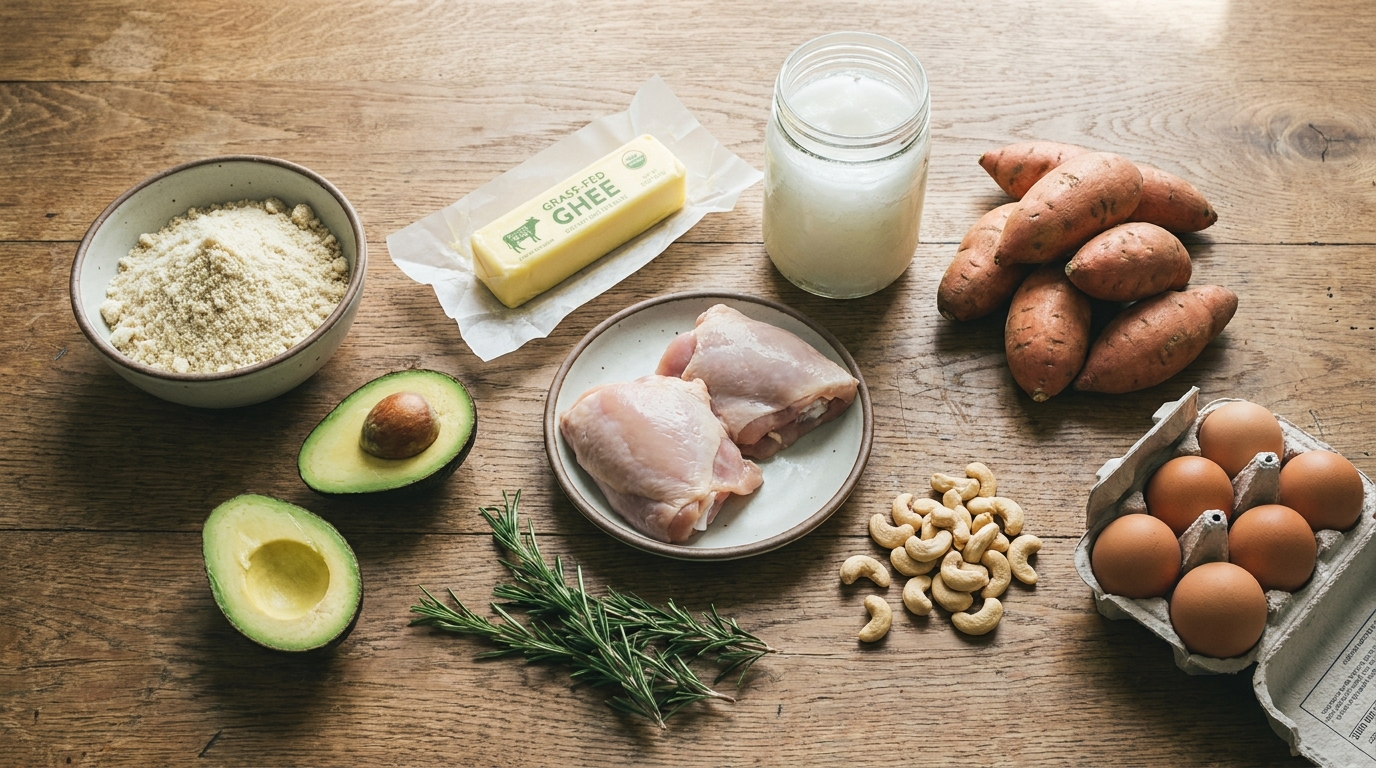
How to Convert Any Recipe to Paleo
You found the perfect recipe. Crispy fried chicken, a stack of buttermilk pancakes, a creamy mushroom risotto. Then you start running through the ingredient list against your paleo rules: all-purpose flour, buttermilk, parmesan cheese, arborio rice, soy sauce. Half of it is off-limits. The other half is borderline. And the comments section is full of people insisting it cannot be paleo-fied without “ruining it.”
If you eat paleo, this is a familiar moment of frustration. The paleo framework is simple in theory — eat what your great-great-great-grandparents would recognize as food — but in a world built around grains, dairy, sugar, and seed oils, the practical version is anything but simple. Almost no recipe you find online is paleo as written, which means almost every recipe needs to be translated.
The good news is that translation is a learnable skill. Once you understand what each non-paleo ingredient is actually doing in a dish — providing structure, fat, sweetness, binding, moisture, browning — you can confidently swap it for a paleo-friendly equivalent that does the same job. This guide will give you the working knowledge to convert recipe to paleo with consistency, whether the original is a chocolate cake, a Thai curry, or your grandmother’s lasagna.
Let’s start with the rules.
Paleo Fundamentals: What’s In and What’s Out
Paleo is built on a single principle: eat whole, unprocessed foods that humans evolved to eat over hundreds of thousands of years, and skip the things that came with agriculture and industrial food processing. The exact boundaries vary slightly between practitioners, but the core list is consistent.
What paleo allows:
- Meat, poultry, and seafood (ideally pasture-raised, wild-caught)
- Eggs
- Vegetables (all of them, including starchy ones like sweet potato, plantain, and squash)
- Fruit (whole, fresh, or dried without added sugar)
- Nuts and seeds (with the exception of peanuts, which are legumes)
- Healthy fats: avocado oil, olive oil, coconut oil, ghee, tallow, lard
- Natural sweeteners in moderation: raw honey, pure maple syrup, coconut sugar, date sugar
- Herbs, spices, vinegars, and most fermented condiments without added sugar or seed oils
What paleo forbids:
- Grains of any kind: wheat, rice, oats, corn, barley, rye, quinoa (technically a seed but typically excluded), spelt, farro
- Legumes: beans, lentils, chickpeas, peanuts, soybeans (which means no soy sauce, edamame, or tofu)
- Dairy: milk, butter, yogurt, cheese, cream (ghee is allowed by most camps because the milk solids are removed)
- Refined sugar and artificial sweeteners
- Processed seed and vegetable oils: canola, soybean, corn, sunflower, safflower, cottonseed, grapeseed
- Alcohol
- Anything heavily processed: most packaged snacks, “natural flavors,” emulsifiers, gums, preservatives
The underlying philosophy is simple. Grains and legumes contain anti-nutrients (phytates, lectins) that paleo proponents argue interfere with digestion and mineral absorption. Dairy is a relatively recent addition to the human diet that many people do not tolerate well. Refined sugar and seed oils are industrial creations linked to inflammation. Strip those out, eat real food, and the body works better.
You do not need to agree with every nuance of the philosophy to benefit from the framework. What matters here is that when you convert a recipe to paleo, you are swapping these forbidden categories for whole-food alternatives that do the same job in the dish.
Grain Replacement Guide
Grains are the single biggest hurdle when you convert a recipe to paleo, because wheat flour shows up in everything — bread, pasta, cakes, cookies, sauces, breading, pizza crust, dumplings. Paleo flours behave very differently from wheat flour, and understanding why is the difference between a good substitution and a hockey puck.
Wheat flour works because of gluten — a stretchy, elastic protein network that traps gas, gives bread its chew, and provides structure. Paleo flours have no gluten. They are made from nuts, coconut, root vegetables, or starches, and each one absorbs liquid, browns, and binds differently. You almost never get a clean 1:1 swap. Instead, you usually need to blend two or three flours and add an extra binder (eggs, gelatin, or psyllium husk) to compensate for the missing gluten structure.
The Main Paleo Flours
- Almond flour: Made from blanched, finely ground almonds. High in fat and protein, low in starch. Adds tenderness and a slight nutty flavor. The closest paleo equivalent to “all-purpose” for cookies, muffins, quick breads, and pancakes. It does not rise like wheat flour, so baked goods come out denser.
- Coconut flour: Made from dried, defatted coconut meat. Extremely absorbent — it soaks up roughly four times its weight in liquid. You can never substitute it 1:1 for any other flour. Use it in small amounts (typically 1/4 to 1/3 the volume of wheat flour) and add extra eggs and liquid.
- Cassava flour: Made from the whole cassava root (yuca). Mild flavor, neutral color, and the closest texture and behavior to wheat flour of any paleo option. Excellent for tortillas, flatbreads, and pasta. Not the same as tapioca starch (which comes from the same root but is just the extracted starch).
- Tapioca starch (or arrowroot starch): Pure starch with no protein. Acts as a thickener, binder, and crisper. Adds stretch and chew to paleo breads and pizza crust. Use it the same way you would cornstarch — to thicken sauces, coat fried foods, or blend into baked goods for lift.
- Plantain flour: Made from dried green plantains. Slightly starchy, very neutral. Works beautifully in tortillas, crackers, and any recipe where you want a wheat-like texture without nut flavor.
Wheat-to-Paleo Flour Substitution Table
| Wheat Flour Function | Best Paleo Substitute | Substitution Ratio | Notes |
|---|---|---|---|
| All-purpose, baking (cookies, muffins) | Almond flour | 1:1 by volume | Reduce liquid by ~25%, add 1 extra egg per cup |
| All-purpose, baking (cakes, breads) | Almond + tapioca starch blend | 3 parts almond : 1 part tapioca | Add 1/2 tsp psyllium husk per cup for structure |
| All-purpose, baking (low-fat option) | Coconut flour | 1/4 to 1/3 the wheat amount | Add 1 extra egg per 1/4 cup coconut flour, increase liquid |
| Tortillas, flatbreads, wraps | Cassava flour | 1:1 by volume | Pliable, browns well, no blend needed |
| Pasta, dumplings | Cassava + tapioca blend | 2 parts cassava : 1 part tapioca | Bind with egg yolks for chew |
| Pizza crust | Almond + tapioca + coconut flour | 2:1:0.5 | Tapioca gives the crust its stretch |
| Breading for fried foods | Almond flour or crushed pork rinds | 1:1 by volume | Pork rinds crisp better than nut flour |
| Sauce and gravy thickener | Tapioca or arrowroot starch | 1 tbsp = 2 tbsp flour | Mix with cold liquid first to avoid clumps |
| Tortilla chips, crackers | Cassava or plantain flour | 1:1 by volume | Plantain is more neutral, cassava more pliable |
| Roux (for soups, sauces) | Arrowroot + ghee or coconut oil | 1:1 by volume | Whisk constantly, do not boil for long |
Pro tip: When converting any baked good, assume you will need to add at least one extra egg compared to the original. Eggs are doing the structural work that gluten used to do.
Dairy Replacement Guide
Dairy is the second-largest category to navigate when you convert a recipe to paleo. The good news is that paleo dairy substitutes are well developed at this point, and most work as near 1:1 swaps. The trick is matching the fat content of the original.
Milk
- Almond milk (unsweetened): Thinnest of the paleo milks. Best for cereals, smoothies, light sauces. Can make baked goods slightly drier.
- Coconut milk (from carton): Mild flavor, decent body. Works for most baking and cooking applications. The boxed version is much thinner than canned.
- Cashew milk: Creamier than almond, neutral in flavor. A good middle ground for sauces and creamy soups.
- Tigernut milk: A more obscure but excellent option. Made from a tuber (not a nut), it has a naturally sweet flavor and creamy body.
For most recipes, replace 1 cup of cow’s milk with 1 cup of unsweetened almond, cashew, or carton coconut milk. If the original recipe was using whole milk for richness (custards, ice cream, creamy sauces), reach for canned coconut milk instead.
Butter
- Ghee: Clarified butter with the milk solids removed. Most paleo practitioners include it because the lactose and casein are gone. Works as a true 1:1 replacement for butter in cooking and most baking. Has a higher smoke point than butter, making it ideal for sauteing and roasting.
- Coconut oil (refined): Solid at room temperature like butter. Refined coconut oil has no coconut flavor. Excellent for pie crusts, biscuits, and anywhere you need a solid fat. Use about 15% less than the butter amount called for, since coconut oil is 100% fat versus butter’s 80%.
- Grass-fed butter (strict paleo grey area): Some paleo camps allow high-quality, grass-fed butter. If that fits your version of paleo, no substitution needed.
- Avocado oil or olive oil: Liquid fats for sauteing applications where butter’s solid structure does not matter. Not great for baking unless the recipe is specifically built around oil.
Cream
- Full-fat canned coconut cream: The workhorse of paleo cream substitution. Whips when chilled, makes rich sauces, holds up in soups and curries. Use it 1:1 for heavy cream. Look for brands with no gums or stabilizers (Native Forest, Aroy-D).
- Cashew cream: Soak raw cashews in hot water for 30 minutes, drain, then blend with fresh water until silky smooth. Extremely versatile and neutral in flavor. Perfect for alfredo-style sauces, cream-based soups, and dessert fillings where you do not want any coconut taste.
- Coconut cream concentrate (creamed coconut): A solid block of pure coconut cream. Melt and whisk into sauces for serious richness.
Yogurt and Sour Cream
- Coconut yogurt (unsweetened, no gums): Most direct yogurt swap. Use 1:1 in baking, smoothies, marinades, and dips.
- Cashew sour cream: Blend soaked cashews with lemon juice, apple cider vinegar, and a pinch of salt. Tangy, thick, and works in tacos, on baked sweet potatoes, or stirred into soups.
Cheese
Cheese is the hardest paleo dairy product to replicate, and honestly, most paleo cheese substitutes are not going to fool anyone. The goal is to capture the function — usually richness, saltiness, or umami — rather than the exact flavor.
- Nutritional yeast: Adds a savory, umami punch. The closest you get to parmesan in a paleo context. Use 2-3 tbsp per 1/4 cup of grated cheese called for.
- Cashew-based cheese: Soaked cashews blended with nutritional yeast, lemon juice, garlic, and salt make a respectable ricotta or cream cheese. For mozzarella-like stretch, blend in tapioca starch and heat the mixture until it thickens.
- Coconut-based hard cheeses: Some commercial brands (Violife, Miyoko’s) make paleo-friendly options, but check labels — many contain non-paleo starches and oils.
- Just leave it out: For many savory dishes (chili, soups, casseroles), cheese is a flavor enhancer rather than structural. A finishing drizzle of olive oil and a sprinkle of nutritional yeast often gets you 80% of the way there.
Sweetener Replacement Guide
Refined sugar, brown sugar, powdered sugar, and corn syrup are all out. Paleo allows whole-food sweeteners that come with at least some nutritional value — minerals, antioxidants, or a lower glycemic load. The catch is that liquid sweeteners (honey, maple syrup) behave differently from dry sweeteners (cane sugar) in baking, and you need to adjust accordingly.
The Main Paleo Sweeteners
- Raw honey: Roughly 25% sweeter than sugar. Adds moisture, browning, and a distinct floral flavor.
- Pure maple syrup: Slightly less sweet than sugar. Contributes a subtle caramel note. Works well in baked goods and as a glaze.
- Coconut sugar: Granulated, behaves much like brown sugar. Lower glycemic index than cane sugar. Mild caramel flavor. The most direct dry-to-dry substitute when you convert a recipe to paleo.
- Date sugar: Made from dried, ground dates. Does not dissolve well in liquids, but works beautifully in baked goods, granola, and crumble toppings.
- Date paste or whole dates: Blend pitted Medjool dates with a little water. Excellent for energy bites, raw desserts, smoothies, and natural sweetening of sauces.
- Monk fruit (pure, no erythritol): Very sweet, no calories or carbs. Some strict paleo practitioners exclude it as too processed; others include it. Read labels carefully — most monk fruit blends include erythritol, which is debated.
- Pure stevia: Same situation as monk fruit. Allowed by some, not by others. Use sparingly because it can taste bitter in large amounts.
Sweetener Conversion Table
| Refined Sugar Amount | Paleo Substitute | Conversion Ratio | Adjustments Needed |
|---|---|---|---|
| 1 cup white sugar | Coconut sugar | 1:1 | No other adjustments needed |
| 1 cup white sugar | Maple syrup | 3/4 cup | Reduce other liquid by 3 tbsp |
| 1 cup white sugar | Raw honey | 2/3 cup | Reduce other liquid by 1/4 cup, lower oven temp by 25°F |
| 1 cup white sugar | Date sugar | 1:1 | Best in recipes that won’t fully dissolve sugar |
| 1 cup white sugar | Date paste | 1 cup paste | Reduce other liquid by 1/4 cup |
| 1 cup brown sugar | Coconut sugar | 1:1 | Add 1 tbsp molasses if desired (not strict paleo) |
| 1 cup powdered sugar | Powdered coconut sugar | 1:1 | Blend coconut sugar in a high-speed blender to powder |
| 1 cup corn syrup | Maple syrup or honey | 1:1 | Both work as binding sweeteners |
Important note on liquid vs dry: Anytime you swap a dry sweetener (sugar, coconut sugar) for a liquid one (honey, maple syrup), you must reduce the liquid in the recipe to compensate. Skipping this step gives you batter that is too wet, leading to flat cookies, gummy cakes, and dense breads. As a rule of thumb, reduce other liquid by 3-4 tablespoons per cup of sugar replaced.
Honey also browns faster than sugar, so drop your oven temperature by 25°F when baking with it to avoid burnt edges.
Legume and Soy Replacement
Legumes — beans, lentils, chickpeas, peanuts, soybeans — are not allowed on paleo. This rules out a surprising amount of pantry staples: hummus, peanut butter, soy sauce, tofu, edamame, black bean burgers, and any recipe leaning on lentils or chickpeas for protein.
Beans, Lentils, and Chickpeas
The function of beans in most recipes is bulk, texture, and a touch of starchy creaminess. Paleo substitutes can match all three.
- Cauliflower (riced or chopped): A great stand-in for chickpeas in stews, curries, and grain-bowl-style dishes. Roast it first for better flavor.
- Mushrooms (chopped): Add meaty texture and umami depth. Excellent replacement for beans in chili, soups, and casseroles.
- Cooked sweet potato or butternut squash (cubed): Provides the starchy, slightly sweet body that beans contribute to many stews and curries.
- Cooked plantain or green banana (cubed): A more authentic-feeling stand-in for starchy beans in Caribbean and African-style dishes.
- Ground meat or shredded chicken: For chili and stews, replacing beans with extra meat is the simplest swap and bumps up the protein.
Hummus
Replace canned chickpeas with roasted cauliflower, zucchini, or even white sweet potato. Blend with tahini (yes, sesame seeds are paleo), garlic, lemon, and olive oil. The result is creamy, flavorful, and indistinguishable from real hummus to most palates.
Soy Sauce
Soy sauce is one of the most commonly missed flavors when you convert recipe to paleo. The substitute is excellent and direct.
- Coconut aminos: A salty, umami-rich sauce made from fermented coconut sap. Slightly sweeter than soy sauce. Use it 1:1 in any recipe calling for soy sauce, tamari, or shoyu. For an even closer match, add a small splash of fish sauce or apple cider vinegar to bump up the savory complexity.
| Original Ingredient | Paleo Substitute | Ratio | Notes |
|---|---|---|---|
| Soy sauce | Coconut aminos | 1:1 | Slightly sweeter, slightly less salty |
| Tamari | Coconut aminos | 1:1 | Same swap as soy sauce |
| Teriyaki sauce | Coconut aminos + honey + ginger + garlic | Build from scratch | Mix 1/2 cup aminos, 2 tbsp honey, 1 tsp ginger, 1 clove garlic |
| Fish sauce | Fish sauce (it’s paleo!) | 1:1 | Look for brands without added sugar |
| Miso paste | Coconut aminos + nutritional yeast | 1 tbsp aminos + 1 tsp nooch per 1 tbsp miso | No perfect substitute; this approximates the umami |
Peanut Butter
- Almond butter: Closest in texture and richness. Use 1:1.
- Cashew butter: Creamier and milder. Great in sauces and smoothies.
- Sunflower seed butter: Nut-free option for those with allergies. Slightly more bitter; works best in sweetened recipes.
- Tahini: For savory applications. Sesame seeds are paleo.
For Thai-style peanut sauces, sub in almond butter at a 1:1 ratio and add a bit more lime juice and coconut aminos to balance the richer flavor.
Seed Oil Replacement
Seed and vegetable oils are perhaps the most universally banned ingredient on paleo. They are highly processed, prone to oxidation at high heat, and overrepresented in modern diets. Replacing them is one of the easiest changes to make when you convert a recipe to paleo, because there are direct, healthy substitutes for every cooking application.
Oils to Avoid
- Canola oil
- Soybean oil
- Corn oil
- Generic “vegetable oil”
- Sunflower oil
- Safflower oil
- Cottonseed oil
- Grapeseed oil
- Margarine and any “buttery spread” containing seed oils
Paleo-Approved Fats (with Smoke Points)
Smoke point matters: the higher it is, the better the oil tolerates frying, searing, and roasting without breaking down.
| Paleo Fat | Smoke Point | Best Use |
|---|---|---|
| Avocado oil (refined) | 520°F | High-heat searing, frying, grilling |
| Ghee | 485°F | Sauteing, roasting, frying |
| Tallow (rendered beef fat) | 420°F | Frying (especially french fries), roasting |
| Lard (rendered pork fat) | 370°F | Pastry, frying, sauteing |
| Coconut oil (refined) | 400°F | Baking, sauteing, stir-frying |
| Coconut oil (virgin) | 350°F | Baking, low-heat cooking, raw applications |
| Duck fat | 375°F | Roasting potatoes (or sweet potatoes), confit |
| Olive oil (extra virgin) | 375°F | Sauteing, dressings, finishing |
| Olive oil (light/refined) | 465°F | Higher-heat cooking |
| Walnut oil | 320°F | Dressings only — never heat |
| Macadamia nut oil | 410°F | Dressings, light sauteing |
Substitution Guide
- For frying (high heat): Use avocado oil, refined coconut oil, tallow, or ghee.
- For roasting: Avocado oil, ghee, tallow, or duck fat.
- For sauteing: Olive oil, ghee, coconut oil, or avocado oil.
- For baking: Refined coconut oil, ghee, or avocado oil are direct 1:1 swaps for vegetable oil.
- For dressings and raw applications: Extra virgin olive oil, walnut oil, or avocado oil.
In every case, the swap is 1:1 by volume. The only thing that changes is the flavor — olive oil and ghee both add their own character, while refined avocado and coconut oils are essentially neutral.
Hidden Non-Paleo Ingredients
Even paleo veterans get tripped up by ingredients that sneak past on labels. When you convert a recipe to paleo — especially if the recipe uses any pre-made or store-bought components — keep an eye out for these.
- Soy lecithin: A common emulsifier derived from soybeans. Found in chocolate, baking mixes, salad dressings, and many “natural” food products. Look for products using sunflower lecithin instead, or skip them entirely.
- MSG and added “natural flavors”: Often vague catch-all terms that can include soy, corn, or wheat-derived compounds. Strict paleo avoids them.
- Modified food starch: Almost always derived from corn, wheat, or potato. Even when potato-based (technically paleo), it is a highly processed ingredient most paleo eaters avoid.
- Cane sugar (in any form): Hidden in spice blends, broths, jerky, hot sauces, ketchup, and almost every commercial salad dressing. Read every label.
- Malt extract or barley malt: A sweetener and flavoring derived from barley (a grain). Found in many cereals, breads, and chocolate products.
- Soy protein, hydrolyzed soy protein, soy isolate: Common in protein powders, processed meats, and energy bars.
- Carrageenan and gums (xanthan, guar): Heavily processed thickeners, debated in the paleo community. Most strict practitioners avoid them.
- Inulin and chicory root fiber: Fine on most paleo plans, but check the source if you’re sensitive.
- Worcestershire sauce: Most brands contain malt vinegar (from barley) and caramelized sugar. Use coconut aminos with a splash of fish sauce instead.
- Bouillon cubes and store-bought broths: Commonly contain soy, MSG, sugar, and seed oils. Make your own or look for paleo-certified brands.
- “Vegetable” anything: If a label says “vegetable oil,” “vegetable starch,” or “vegetable protein,” assume it is non-paleo unless proven otherwise.
The simplest rule: if the ingredient list reads like a chemistry textbook, it is probably not paleo.
The Easy Way: Let AI Handle the Conversion
By now you have a real working knowledge of paleo substitution. You know that coconut flour soaks up four times its weight in liquid, that honey browns faster than sugar, that coconut aminos replaces soy sauce 1:1, and that “natural flavors” is a red flag in disguise.
Here is the honest truth: applying all of this to every recipe you find online is real work. You have to read each ingredient, identify which category it falls into, figure out what it is doing structurally in the dish, choose the right paleo substitute, and recalculate the ratios. For a simple stir-fry, that might take five minutes. For a layered cake or a complex curry, you can easily spend half an hour translating before you even start cooking.
That is exactly the problem Re-Whisk was built to solve. Re-Whisk is a free Chrome extension that uses AI food science to convert any web recipe to paleo (or keto, gluten-free, vegan, dairy-free, and more) with a single click. It does not just do naive swaps. It analyzes what each ingredient does in the specific recipe in front of you, picks the right paleo substitute for that exact context, and adjusts quantities, oven temperatures, and cooking times to match.
Found a creamy chicken alfredo? Re-Whisk swaps the pasta for spaghetti squash, the heavy cream for full-fat coconut cream, the parmesan for a nutritional yeast and cashew blend, the all-purpose flour in the roux for arrowroot starch, and adjusts the cooking time so the squash holds its shape and the sauce thickens correctly. All in about three seconds, right on the recipe page you were already looking at.
Paleo Substitution Cheat Sheet
A quick-reference table for the most common swaps when you convert a recipe to paleo.
| Non-Paleo Ingredient | Paleo Substitute | Ratio | Notes |
|---|---|---|---|
| All-purpose flour (baking) | Almond + tapioca blend (3:1) | 1:1 | Add 1 extra egg per cup, reduce liquid 25% |
| All-purpose flour (tortillas, wraps) | Cassava flour | 1:1 | Most pliable paleo flour |
| All-purpose flour (thickener) | Arrowroot or tapioca starch | 1 tbsp = 2 tbsp flour | Mix with cold liquid first |
| Bread crumbs | Almond flour or crushed pork rinds | 1:1 | Pork rinds crisp better when frying |
| Pasta | Spaghetti squash, zucchini noodles, sweet potato noodles | 1 medium squash = 1 lb pasta | Roast squash, spiralize zucchini |
| Rice | Cauliflower rice | 1:1 | Saute briefly, do not overcook |
| Cow’s milk | Almond, cashew, or carton coconut milk | 1:1 | Unsweetened only |
| Heavy cream | Full-fat canned coconut cream | 1:1 | Use solid portion from chilled can for whipping |
| Butter | Ghee | 1:1 | Refined coconut oil for pastry |
| Cream cheese | Cashew cream cheese | 1:1 | Soak cashews, blend with lemon and salt |
| Sour cream | Cashew sour cream or coconut yogurt | 1:1 | Add lemon juice for tang |
| Yogurt | Unsweetened coconut yogurt | 1:1 | Look for brands without gums |
| Parmesan | Nutritional yeast | 2-3 tbsp per 1/4 cup parmesan | Combine with crushed cashews for texture |
| Mozzarella | Cashew + tapioca melty cheese | 1:1 by volume | Heat blended mixture until stretchy |
| White sugar | Coconut sugar | 1:1 | Most direct dry swap |
| White sugar | Maple syrup | 3/4 cup per cup sugar | Reduce other liquid by 3 tbsp |
| White sugar | Raw honey | 2/3 cup per cup sugar | Drop oven temp by 25°F |
| Brown sugar | Coconut sugar | 1:1 | Already has caramel notes |
| Corn syrup | Honey or maple syrup | 1:1 | Either works as a binder |
| Chocolate chips | Paleo dark chocolate chips (Hu, Enjoy Life) | 1:1 | Look for cane sugar-free brands |
| Soy sauce | Coconut aminos | 1:1 | Slightly sweeter |
| Tamari | Coconut aminos | 1:1 | Same swap |
| Worcestershire sauce | Coconut aminos + fish sauce splash | 1:1 | Adds depth without grain or sugar |
| Peanut butter | Almond butter | 1:1 | Cashew or sunflower for variety |
| Beans (chili, stew) | Chopped mushrooms + extra meat | 1:1 by volume | Add umami with tomato paste |
| Chickpeas (hummus) | Roasted cauliflower or zucchini | 1:1 | Blend with tahini, lemon, garlic |
| Lentils | Cauliflower + ground meat | 1:1 by volume | Bumps protein, matches texture |
| Vegetable oil (cooking) | Avocado oil | 1:1 | Highest smoke point of paleo oils |
| Vegetable oil (baking) | Refined coconut oil | 1:1 | Neutral flavor |
| Canola oil | Avocado or refined coconut oil | 1:1 | Both work universally |
| Margarine | Ghee or coconut oil | 1:1 | Ghee for flavor, coconut oil for vegan paleo |
| Bouillon cubes | Homemade bone broth or paleo-certified broth | 1 cup per cube | Check labels carefully |
| Cornstarch | Arrowroot or tapioca starch | 1:1 | Same thickening power |
| Beer (in cooking) | Bone broth + apple cider vinegar | 1:1 broth + 1 tsp vinegar | Mimics savory acidity |
| Wine (in cooking) | Bone broth + lemon juice | 1:1 broth + 1 tbsp lemon | For deglazing and sauces |
Putting It All Together
Learning to convert a recipe to paleo is a skill that compounds quickly. The first few translations feel like a slog — you are looking up ratios, second-guessing flour blends, and recalculating liquid. After a dozen recipes, the patterns become automatic. You see “buttermilk” and reach for almond milk plus apple cider vinegar without thinking. You see “soy sauce” and grab the coconut aminos. You see “all-purpose flour” and start mentally building a blend.
Start with forgiving recipes — soups, stews, curries, sauces, marinades — where exact structure matters less and you can taste-adjust as you go. As your confidence grows, move on to baking and more technique-driven dishes where the ratios really matter. And when you find yourself short on time or staring at a complex recipe with eight non-paleo ingredients, remember that Re-Whisk can do the translation for you in seconds. Either way, the rule is the same: identify the function of each ingredient, then pick the paleo substitute that fulfills the same role. Do that consistently, and you will be cooking confidently within paleo in no time.