The Complete Guide to Dairy-Free Baking Substitutions
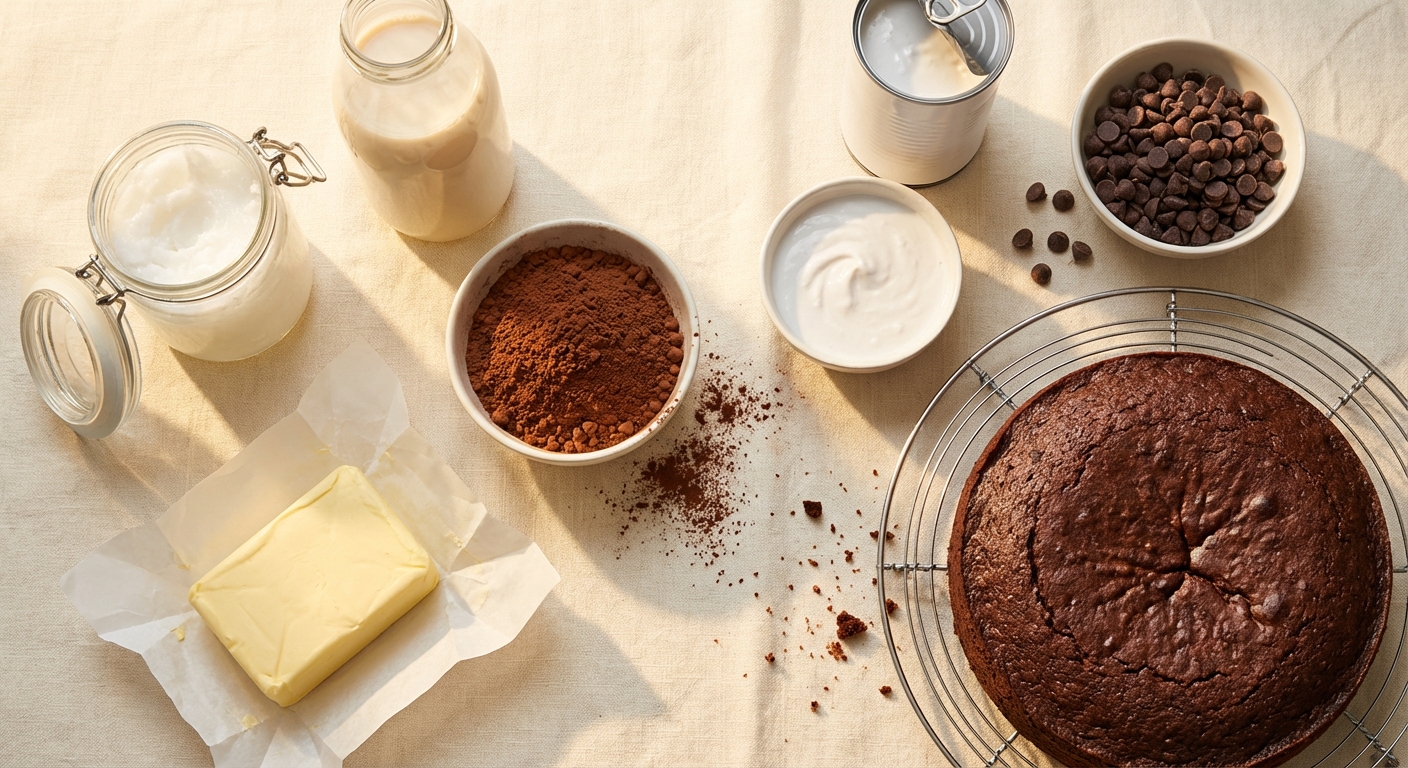
The Complete Guide to Dairy-Free Baking Substitutions
Dairy is everywhere in baking. Butter, milk, cream, cream cheese, buttermilk — flip open almost any cookbook and you will find at least one of these in every recipe. When you need to go dairy-free, whether because of a lactose intolerance, a casein allergy, a vegan diet, or a doctor’s orders, it can feel like you are fighting the recipe rather than following it.
The reason dairy-free baking substitutions trip people up is that dairy is not doing one job in a recipe. It is doing several at the same time. Butter creates flaky layers, adds richness, and helps cookies brown. Milk provides moisture and contributes to the golden Maillard reaction on top of your banana bread. Cream whips into airy peaks that hold a mousse together. Swap any of these out carelessly and the whole thing can fall apart.
This guide breaks down what each dairy ingredient actually does, gives you specific substitutions with ratios, and shows you how to troubleshoot when things go sideways. By the end, you will have a reliable playbook for making any baked good dairy-free without sacrificing taste or texture.
Understanding Dairy’s Role in Baking
Before you substitute anything, it helps to understand the job each dairy ingredient is doing. Baking is chemistry, and every ingredient earns its place.
What Butter Does
Butter is roughly 80% fat, 15% water, and 5% milk solids. That combination does a lot of heavy lifting:
- Flaky layers in pastry. Cold butter creates pockets of steam as it melts in the oven, which is how puff pastry and pie crusts get their layers.
- Tenderizing. Fat coats flour proteins and limits gluten development, producing a softer crumb in cakes and muffins.
- Flavor. The milk solids in butter carry a distinct richness that is hard to replicate with neutral oils.
- Browning. Those same milk solids undergo the Maillard reaction, giving baked goods their golden, toasty surface.
What Milk Does
Milk contributes hydration, but it is not just water. The lactose (sugar) and proteins in milk also play a role:
- Hydration. Milk dissolves dry ingredients and activates leaveners like baking soda.
- Maillard browning. Lactose and milk proteins react under heat to produce golden color and deeper flavor on crusts and tops.
- Protein structure. Milk proteins (casein and whey) add a small but meaningful amount of structural support to batters and doughs.
What Cream Does
Heavy cream is about 36% fat, which gives it properties that milk cannot match:
- Richness. Higher fat content produces a denser, more luxurious mouthfeel in ganaches and custard-based desserts.
- Whipping. The fat globules in cream trap air when whipped, forming stable peaks for toppings, fillings, and mousses.
- Emulsification. Cream helps bind fat and water phases together in sauces, frostings, and batters.
What Cheese Does in Baked Goods
Cream cheese in cheesecakes, ricotta in cannoli filling, mascarpone in tiramisu — these contribute body, tang, and fat that hold desserts together. Their acidity can also interact with leaveners.
Butter Substitutes for Baking
This is usually the first and most important dairy-free baking substitution to get right. Here is how the main options compare:
| Substitute | Ratio (per 1 cup butter) | Fat Content | Best For | Watch Out For |
|---|---|---|---|---|
| Coconut oil (solid) | 1 cup | ~100% fat | Pie crusts, cookies, pastries needing solid fat | Slight coconut flavor; use refined for neutral taste |
| Coconut oil (melted) | 3/4 cup | ~100% fat | Quick breads, muffins, brownies | Higher fat concentration; reduce amount slightly |
| Vegan butter (stick form) | 1 cup | ~70-80% fat | Any recipe; closest 1:1 swap | Quality varies by brand; look for ones with fat content close to dairy butter |
| Applesauce | 1/2 cup | Negligible fat | Muffins, quick breads (lower-fat option) | Adds moisture and sweetness; reduce sugar in recipe |
| Avocado (mashed) | 1 cup | ~15% fat | Brownies, chocolate cakes | Green tint; pair with dark batters; flavor is mild |
| Nut butters (almond, cashew) | 1/2 cup | ~50% fat | Cookies, bars, dense cakes | Adds strong flavor and protein; not a neutral swap |
Tips for choosing:
- For recipes where butter must be cold and cut into flour (pie crusts, biscuits, scones), reach for solid coconut oil or a high-quality vegan butter stick. Both can be chilled and handled the same way as dairy butter.
- For recipes where butter is melted (brownies, banana bread, pancakes), melted coconut oil works beautifully. Use refined coconut oil if you do not want any coconut taste.
- Vegan butter sticks are the safest all-purpose swap. They are formulated to behave like dairy butter in most applications. Check that the brand you choose has a similar fat percentage to real butter (around 80%).
Milk Substitutes for Baking
Not all plant milks perform equally in a batter. The differences come down to fat content, protein content, and flavor.
Oat Milk — The All-Rounder
Oat milk is the closest plant-based match to dairy milk for baking. It has a mild, slightly sweet flavor, a creamy body, and enough natural sugars to contribute to browning. If you are only going to keep one plant milk in the fridge for baking, make it oat.
Best for: Cakes, muffins, pancakes, bread, and any recipe where milk is the primary liquid.
Soy Milk — Best for Structure
Soy milk has the highest protein content of any widely available plant milk, typically around 7-9 grams per cup compared to dairy milk’s 8 grams. That protein helps with structure and rise in baked goods. It also froths and heats well.
Best for: Custards, puddings, yeasted breads, and recipes where milk protein matters for setting or rising.
Almond Milk — Light and Neutral
Almond milk is thinner and lower in both fat and protein. It works fine in recipes where milk is a minor ingredient, but it can produce a slightly drier or less rich result if it is the star.
Best for: Lighter baked goods, glazes, or recipes where milk is just a few tablespoons.
Coconut Milk (Full-Fat, Canned) — Maximum Richness
Full-fat canned coconut milk is thick, rich, and high in fat. It can stand in for milk in recipes where you want extra body, like coconut tres leches or tropical-flavored baked goods. The carton variety is thinner and closer to regular milk.
Best for: Rich cakes, coconut-flavored desserts, anywhere you want extra creaminess.
General rule: Use unsweetened, unflavored versions of whatever plant milk you choose. Vanilla-flavored or sweetened varieties will throw off the flavor and sugar balance in your recipe.
Cream and Cream Cheese Alternatives
Replacing cream and cream cheese requires a bit more care because you are dealing with higher fat content and specific textures.
Coconut Cream
Coconut cream is the thick layer that rises to the top of a chilled can of full-fat coconut milk. It is the most reliable dairy-free substitute for heavy cream.
- Can you whip it? Yes. Chill the can overnight, scoop out the solid cream, and whip it with a bit of powdered sugar. It holds peaks reasonably well, though not as stiffly or as long as dairy whipped cream.
- Flavor note: Coconut flavor is present but subtle. It pairs well with chocolate, fruit, and vanilla. Not ideal if you need a completely neutral cream.
Cashew Cream
Blend soaked raw cashews with water until completely smooth for a rich, neutral-tasting cream. The ratio is roughly 1 cup of cashews to 1/2 to 3/4 cup of water, depending on how thick you need it.
- Can you whip it? Not into stiff peaks, but it blends into an incredibly silky, thick cream that works in cheesecakes, frostings, and cream sauces.
- Flavor note: Very mild and slightly sweet. The most neutral option for dairy-free cream cheese replacements in cheesecakes.
Silken Tofu
Blended silken tofu has a remarkably smooth, creamy texture. It is high in protein and low in fat, making it a lighter alternative.
- Can you whip it? It blends smooth but does not whip into peaks. Use it as a base for mousse, pie filling, or blended frostings.
- Flavor note: Neutral on its own, but needs strong flavoring (vanilla, chocolate, citrus) to shine in desserts.
For cream cheese specifically, several brands now make dairy-free cream cheese that performs well in baked cheesecakes. If you prefer to make your own, the cashew cream method above with added lemon juice and a pinch of salt gets you surprisingly close.
The Buttermilk Hack
Buttermilk shows up in recipes for pancakes, biscuits, cakes, and scones. Its acidity reacts with baking soda to produce lift, and it tenderizes gluten for a softer crumb.
Making dairy-free buttermilk takes about two minutes:
- Measure 1 cup of your preferred plant milk (oat or soy work best here).
- Add 1 tablespoon of lemon juice or white vinegar.
- Stir gently and let it sit for 5-10 minutes. The milk will curdle slightly and thicken. That is exactly what you want.
Use this 1:1 in any recipe calling for buttermilk. The acid does the same job regardless of whether the milk came from a cow or an oat.
Chocolate and Frosting Without Dairy
Chocolate desserts and frostings are actually some of the easiest things to make dairy-free, because cocoa and dark chocolate are naturally dairy-free. The problems start when recipes call for milk chocolate or butter-based frostings.
Dairy-Free Chocolate
- Cocoa powder is naturally dairy-free. Check the label to confirm, but pure cocoa powder contains no milk.
- Dark chocolate (70% cacao and above) is usually dairy-free. Always read the ingredients — some brands add milk fat even to dark varieties.
- Dairy-free chocolate chips are widely available now. Look for ones made with cocoa butter rather than palm oil for better melting and flavor.
Dairy-Free Frosting
- Coconut cream frosting. Whip chilled coconut cream with powdered sugar and vanilla. Best for lighter applications like topping cupcakes or layering between cake tiers.
- Vegan buttercream. Beat vegan butter with powdered sugar, vanilla, and a splash of plant milk. This is the most versatile dairy-free frosting and pipes well.
- Chocolate ganache. Heat coconut cream (or any full-fat plant milk) and pour it over chopped dairy-free dark chocolate. Stir until smooth. This makes a glossy, rich ganache for cakes, truffles, or tart fillings.
For cocoa butter specifically, it is the fat naturally present in chocolate and is technically dairy-free despite the name. It is useful for making white chocolate substitutes and adding richness to dairy-free confections.
Troubleshooting Common Dairy-Free Baking Problems
Even with the right substitutions, dairy-free baking can behave differently. Here are the most common issues and how to fix them.
Dense or Heavy Texture
Cause: The substitute has more fat or less protein than the original dairy ingredient, producing a heavier crumb.
Fix: Add an extra half teaspoon of baking powder to boost lift. If using coconut oil in place of butter, reduce the amount by about 2 tablespoons per cup to account for coconut oil’s higher fat density.
Baked Goods Will Not Brown
Cause: Plant milks have less lactose and protein than dairy milk, which means less Maillard reaction on the surface.
Fix: Brush the top of breads, pastries, or pie crusts with a thin layer of plant milk mixed with a pinch of sugar before baking. For cookies, a tablespoon of maple syrup in the dough helps. Soy milk browns better than almond or rice milk thanks to its higher protein content.
Too Crumbly or Falls Apart
Cause: Not enough binding or moisture. Dairy proteins help hold batters together, and removing them can leave things fragile.
Fix: Add 1-2 tablespoons of ground flaxseed mixed with water (1 tablespoon flax to 3 tablespoons water, rested for 5 minutes) to add binding. Alternatively, increase the plant milk by a couple of tablespoons to restore moisture.
Flavor Tastes Flat or “Off”
Cause: Dairy butter and milk carry complex flavors that plant-based alternatives sometimes lack.
Fix: Add a pinch of salt (dairy butter contains salt that vegan butter might not). A small splash of vanilla extract rounds out sweetness. For chocolate recipes, a teaspoon of espresso powder deepens the flavor without adding coffee taste.
The Easy Way: Let AI Handle the Math
Every substitution in this guide comes with ratios, adjustments, and caveats. When you are adapting a single recipe you have memorized, that is manageable. But when you are looking at a new recipe online and you want to make it dairy-free right now, calculating every swap by hand gets tedious fast — especially when a recipe calls for butter, milk, and cream cheese all at once.
Re-Whisk is a free Chrome extension that does all of this automatically. When you are on any recipe page, Re-Whisk reads the recipe, identifies every dairy ingredient, and recalculates the substitutions using AI — adjusting ratios, accounting for how the ingredients interact, and giving you a clean, ready-to-follow dairy-free version.
No mental math. No cross-referencing substitution charts. Just a converted recipe that works.
Quick Reference Card: Dairy-Free Baking Substitutions
Keep this handy when you are mid-recipe and need a fast answer.
| Dairy Ingredient | Dairy-Free Substitute | Ratio |
|---|---|---|
| Butter (solid, for pastry) | Solid coconut oil or chilled vegan butter | 1:1 |
| Butter (melted, for batters) | Melted coconut oil (refined) | 3/4 cup per 1 cup butter |
| Butter (creamed, for cakes) | Vegan butter sticks | 1:1 |
| Whole milk | Oat milk or soy milk (unsweetened) | 1:1 |
| Heavy cream | Coconut cream (from chilled can) | 1:1 |
| Cream cheese | Cashew cream + lemon juice, or store-bought dairy-free cream cheese | 1:1 |
| Buttermilk | Plant milk + 1 tbsp lemon juice per cup | 1:1 |
| Whipped cream | Whipped chilled coconut cream | 1:1 |
| Sour cream | Coconut cream + 1 tsp lemon juice, or dairy-free yogurt | 1:1 |
| Milk chocolate | Dairy-free dark chocolate chips (check label) | 1:1 |
| Butter in frosting | Vegan butter + powdered sugar | 1:1 |
Dairy-free baking is not about deprivation. It is about learning which swaps work, understanding why, and building a set of go-to substitutions you trust. Whether you are baking for yourself, for a family member with an allergy, or for a dinner guest, the recipes do not have to suffer.
And when you want it done in seconds, Re-Whisk is there to handle the conversions for you.